How to Build a Healthy Parent-Child Educational Partnership?
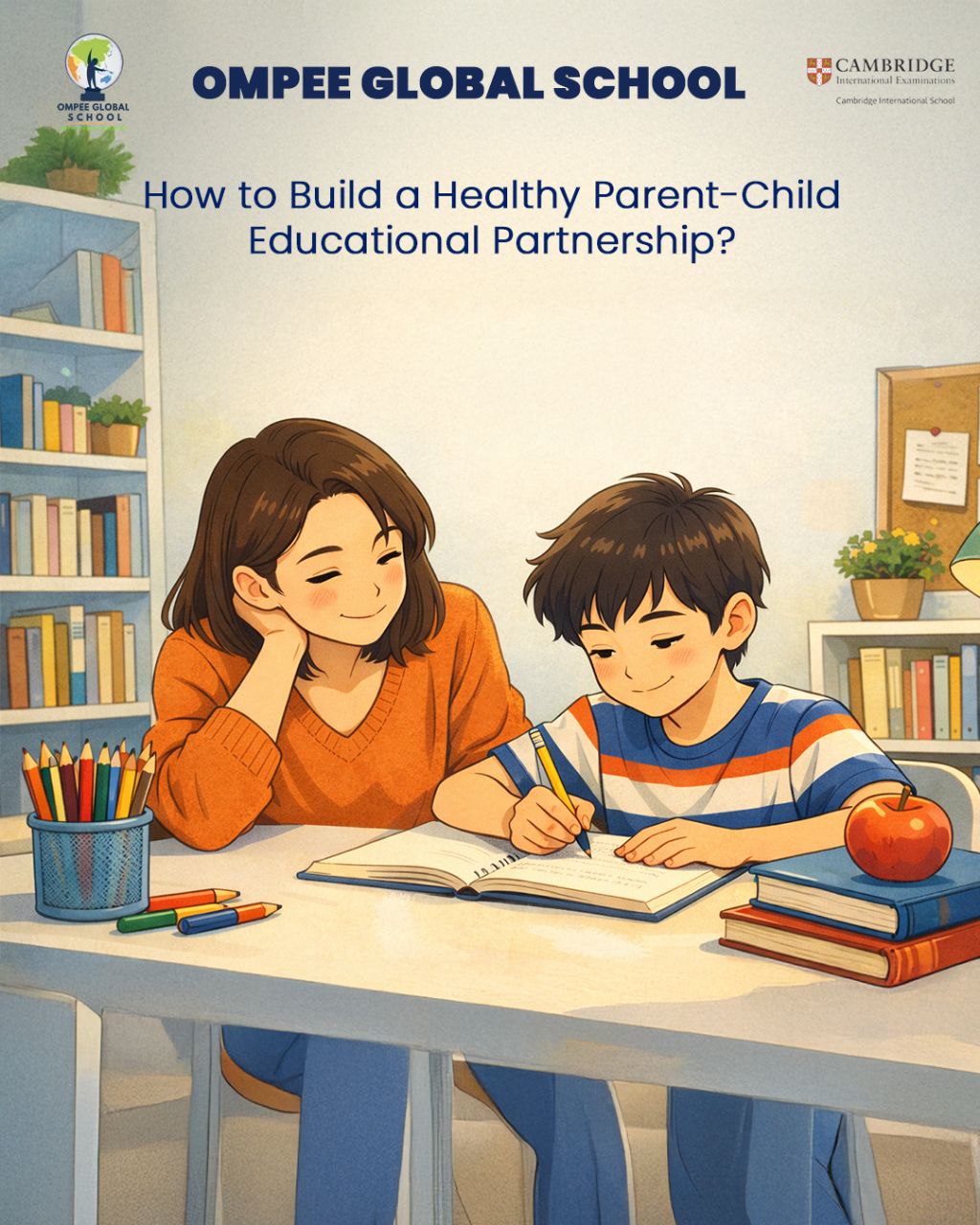
Building a healthy educational partnership with your child isn't about becoming their second teacher or a "homework police officer." It’s about moving from a position of authority to one of collaboration. At Ompee Global School, we believe that when parents and children work as a team, learning becomes a joy rather than a chore. Here is how you can build that bridge.
The Team Approach: Building a Healthy Parent-Child Educational Partnership
In the journey of education, the school provides the map, but the parents and the child are the ones in the car together. To make the ride smooth, you need a partnership built on trust, not just grades.
1. Shift from "Results" to "Effort"
When your child brings home a test, don't just look at the score at the top. Ask about the process. Instead of saying, "Why did you get a B?" try, "I saw how hard you practiced those math problems. Which part are you most proud of?" This teaches them that growth matters more than perfection.
2. Be the "Lead Learner," Not the Expert
You don’t need to have all the answers. In fact, it’s better if you don’t! If your child asks a question you can't answer, say: "I’m not sure, let’s look it up together." This models curiosity and shows them that learning is a lifelong habit, even for adults.
3. Create a "No-Fear" Zone for Mistakes
A partnership thrives when a child feels safe failing. If they fail a quiz, treat it as "data" rather than a "disaster." The Partnership Move: Sit down and say, "Okay, this didn't go as planned. What do we think went wrong, and how can we try a different strategy next time?"
4. Establish a "Communication Rhythm"
Don't wait for the Parent-Teacher Meeting to talk about school. Make "The High and The Low" a dinner table tradition. Ask: "What was the coolest thing you learned today?" and "What was the most frustrating part of your day?" Sharing your own daily challenges (humanizing yourself) helps them feel comfortable sharing theirs.
5. Respect Their Autonomy (The 80/20 Rule)
As they grow, give them more "driver's seat" time. Let them choose which subject to tackle first or how to organize their desk. The Rule: Guide them 20% of the time, and let them lead 80% of the time. This builds the independence they need for the global stage.
6. Celebrate the "Small Wins"
Partnerships are fueled by appreciation. Did they finish a difficult chapter without being asked? Did they show improvement in their handwriting? Celebrate it! A small high-five or an extra 15 minutes of playtime goes a long way in reinforcing positive habits.
7. Parent–School Interaction Programs
Regular interaction between parents and teachers plays a vital role in strengthening a child’s educational journey. Programs like “Coffee With Parents” organized by create a friendly platform where parents and educators can discuss a child’s progress, learning habits, and overall development.
Conclusion: Growing Together
Building a healthy educational partnership isn't about being a perfect parent or having a child who gets perfect grades. It is about creating an environment of trust, curiosity, and mutual respect. When children feel that their parents are "partners in progress" rather than "inspectors of results," they develop the confidence to take risks and the resilience to bounce back from challenges.